The 10 Greatest Reconnaissance Missions That Changed Military History

The 10 Greatest Reconnaissance Missions That Changed Military History

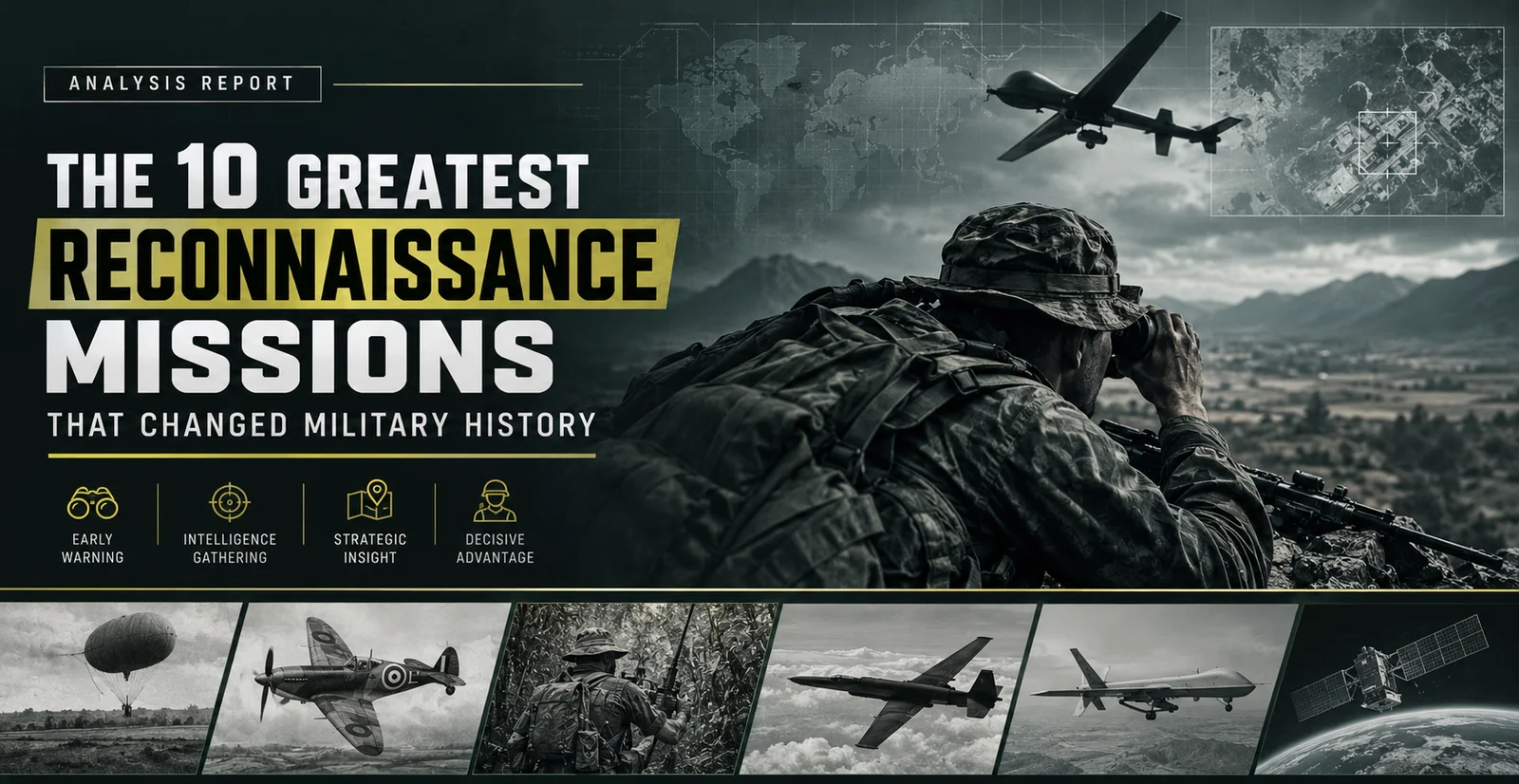
The old military adage states that battles are won before the first shot is fired, and nowhere is this more evident than in the art of reconnaissance. 'Recce' is the vital lifeline of any armed force—the eyes and ears that pierce the fog of war. Without accurate intelligence, even the most formidable armies are rendered blind. Throughout history, specialised units, daring pilots, and cutting-edge technology have been pushed to their absolute limits to gather critical information. From the unforgiving deserts of North Africa to the silent vacuum of low-Earth orbit, here is a definitive look at 10 of the most impactful reconnaissance missions in the world.

📋 How We Evaluated This

Compiling a list of the top reconnaissance missions requires a careful evaluation of several critical factors. The criteria used to select and rank these operations include:

  • Strategic Impact: Did the intelligence gathered significantly alter the course of a war, trigger a decisive victory, or avert a major global crisis?

  • Risk and Audacity: The level of physical danger faced by the operators, whether surviving deep behind enemy lines or flying over heavily defended hostile airspace.

  • Technological Innovation: Did the mission pioneer or push the boundaries of existing technology (e.g., the advent of mid-air satellite film recovery or Mach 3 sustained flight)?

  • Historical Legacy: The lasting influence the mission had on the evolution of military intelligence and modern special operations doctrine.

#10

Operation Neptune Spear Pre-Raid Surveillance (2011)
Operation Neptune Spear Pre-Raid Surveillance (2011)
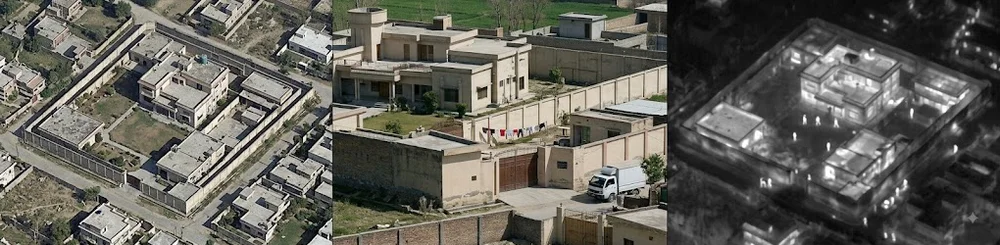
The tactical execution of the raid that eliminated Osama bin Laden was flawless, but it was built on months of painstaking surveillance. Once the Abbottabad compound was identified, a joint CIA and JSOC intelligence apparatus went to work. A local safe house was established to monitor the compound's 'pattern of life', while stealth drones, including the RQ-170 Sentinel, and classified satellites gathered constant overhead imagery. This multi-layered recce ensured that when the US Navy SEALs finally breached the walls, they knew the exact layout of the complex.
#9

Bravo Two Zero (Gulf War, 1991)

Bravo Two Zero (Gulf War, 1991)
Perhaps the most famous—and controversial—patrol of the modern era, Bravo Two Zero was an eight-man SAS team deployed behind Iraqi lines in 1991. Their primary objective was to gather intelligence on the movement of Scud missiles and sever underground fibre-optic communications cables. The mission quickly went awry when the patrol was compromised shortly after insertion. What followed was a harrowing fighting retreat across the freezing desert towards the Syrian border, cementing their story in military lore as a testament to endurance and survival.
#8

SAS/SBS Falklands Advance Force Reconnaissance (1982)
SAS/SBS Falklands Advance Force Reconnaissance (1982)
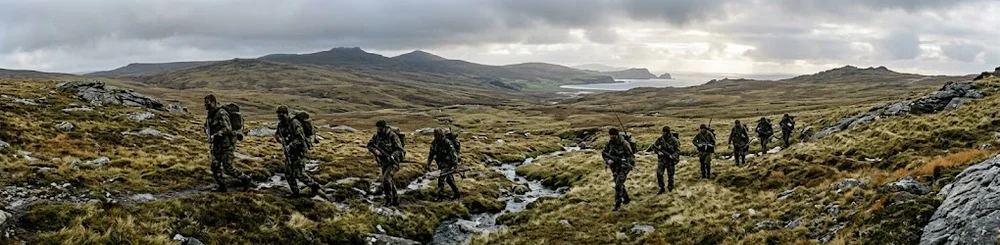
Weeks before the main British task force arrived in the South Atlantic to retake the Falkland Islands, small elements of the Special Air Service (SAS) and Special Boat Service (SBS) were covertly inserted into the freezing, desolate landscape. Enduring hurricane-force winds and sub-zero temperatures, these operators established hidden observation posts. They meticulously mapped Argentine defensive positions, monitored troop movements, and guided in precise naval gunfire, laying the essential groundwork for the successful amphibious assault.
#7

SR-71 Blackbird Overflights (1960s–1990s)
SR-71 Blackbird Overflights (1960s–1990s)
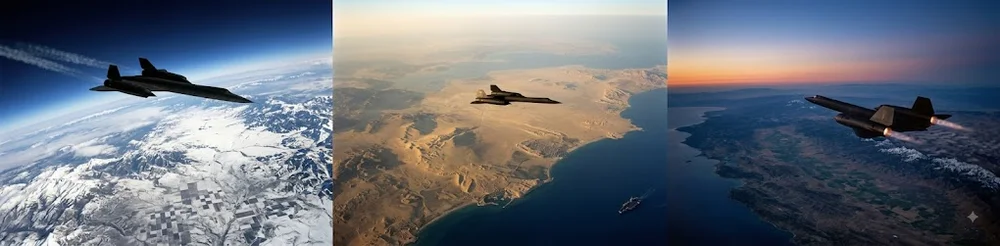
Born from the need to outrun the missiles that brought down the U-2, Lockheed's SR-71 Blackbird remains a marvel of aerospace engineering. Flying at speeds exceeding Mach 3 and at altitudes above 85,000 feet, the Blackbird was practically invulnerable to interception. During its operational history, which spanned the Cold War and the Yom Kippur War, it gathered unparalleled photographic and electronic intelligence. If a surface-to-air missile was detected, the standard evasive procedure was simply to accelerate. Not a single SR-71 was ever lost to enemy fire.
#6

Corona Reconnaissance Satellite Programme (1959–1972)
Corona Reconnaissance Satellite Programme (1959–1972)
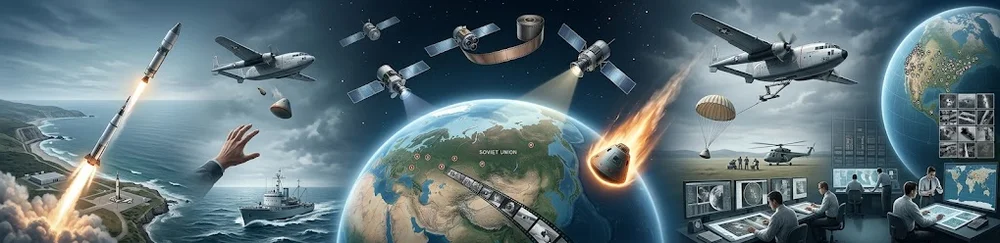
Before the era of digital data transmission, the CIA and US Air Force pioneered the Corona programme—the world's first successful reconnaissance satellite system. These satellites orbited the Earth, taking high-resolution photographs of Soviet bomber bases and nuclear sites. The exposed film was then wound into protective canisters and dropped back into the atmosphere, descending via parachute to be snagged mid-air by specialised recovery aircraft. Corona completely revolutionised strategic intelligence, mapping millions of square miles of denied territory.
#5

Cuban Missile Crisis U-2 Flights (1962)
Cuban Missile Crisis U-2 Flights (1962)
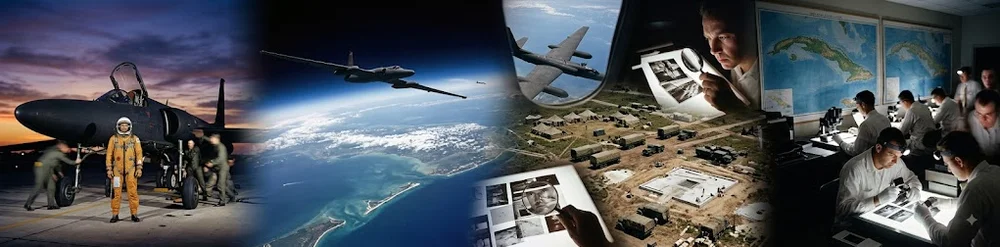
Just two years after the Powers incident, the U-2 once again took centre stage, this time saving the world from nuclear war. In October 1962, U-2 aircraft piloted by Major Richard Heyser and others flew high-altitude passes over Cuba, returning with undeniable photographic evidence of Soviet nuclear missile sites under construction. This vital intelligence gave President John F. Kennedy the proof needed to implement a naval blockade, forcing a diplomatic resolution to the most dangerous standoff in human history.
#4

Gary Powers' U-2 Shootdown (1960)

Gary Powers' U-2 Shootdown (1960)
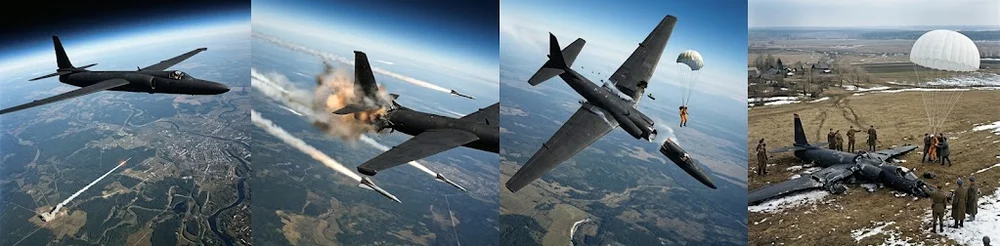
At the height of the Cold War, the CIA relied on the U-2 spy plane to photograph Soviet military installations from the edge of space. On 1 May 1960, pilot Francis Gary Powers was tasked with flying deep into Soviet airspace to photograph intercontinental ballistic missile (ICBM) sites. However, Soviet air defences had improved, and his aircraft was shot down over Sverdlovsk by a surface-to-air missile. Powers' capture shattered the illusion of American aerial invulnerability and sparked a massive diplomatic incident that derailed a crucial superpower summit.
#3

MACV-SOG Reconnaissance Operations (Vietnam War)
MACV-SOG Reconnaissance Operations (Vietnam War)
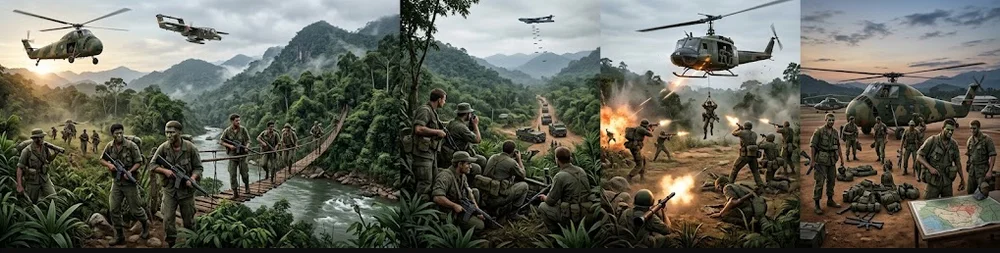
The Military Assistance Command, Vietnam – Studies and Observations Group (MACV-SOG) was a highly classified, multi-service United States special operations unit. Operating largely in the shadows, small MACV-SOG recce teams were inserted across the borders into Laos and Cambodia to monitor the Ho Chi Minh Trail. They gathered intelligence on North Vietnamese supply lines, captured enemy personnel, and directed airstrikes. Outnumbered and operating in hostile jungle terrain, these teams faced some of the highest casualty rates of the war, relying on sheer audacity to survive.
#2

Pre-Midway Naval/PBY Catalina Reconnaissance (1942)
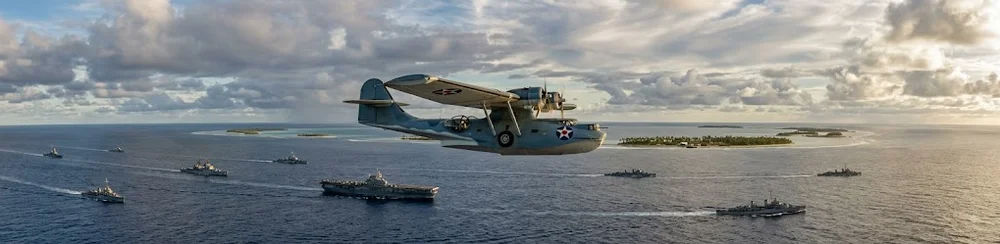
Pre-Midway Naval/PBY Catalina Reconnaissance (1942)
The Battle of Midway is widely regarded as the turning point of the Pacific War, but it was a victory forged by aerial reconnaissance. In June 1942, US Navy PBY Catalina flying boats flew gruelling, long-range search patterns over the vast ocean. On the morning of 3 June, a Catalina crew successfully spotted the approaching Japanese occupation force. This critical early warning stripped the Japanese of their element of surprise, allowing the American fleet to position itself for the devastating ambush that destroyed four enemy aircraft carriers.
#1

LRDG Desert Reconnaissance Patrols (WWII, North Africa)
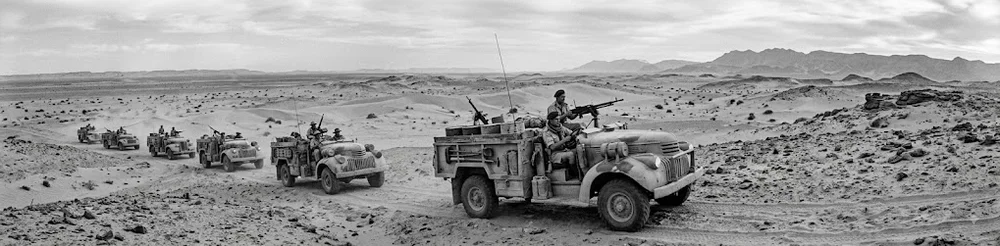
LRDG Desert Reconnaissance Patrols (WWII, North Africa)
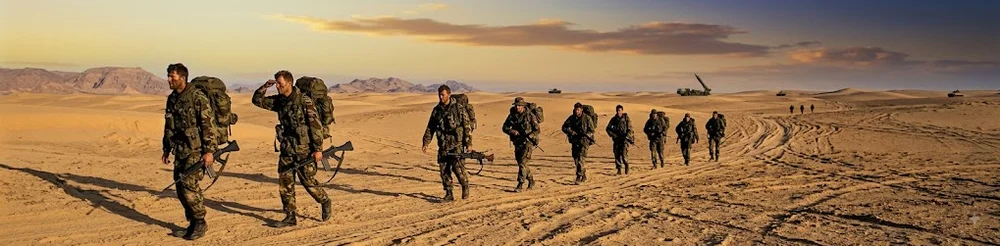
During the Second World War, the Long-Range Desert Group (LRDG) became the master of the unforgiving North African terrain. Operating hundreds of miles behind Axis lines, these highly skilled navigators and survivalists conducted deep penetration missions. Their most vital contribution was the 'Road Watch', where they clandestinely monitored traffic along the main coastal roads. By tallying enemy vehicles, troops, and supplies, the LRDG provided the British 8th Army with the precise intelligence needed to outmanoeuvre General Erwin Rommel's forces.

Conclusion

The nature of reconnaissance has transformed dramatically over the last century. We have moved from soldiers navigating featureless deserts with compasses to hypersonic jets and satellites capturing imagery from the edge of space. Yet, despite the immense technological leaps, the fundamental essence of the recce mission remains unchanged: it is the relentless, often perilous pursuit of the truth. Whether peering through binoculars from a freezing observation post or analysing a live drone feed thousands of miles away, reconnaissance remains the indispensable foundation upon which all military success is built.
Share this ranking

🏆 More Rankings

💬 From the Forum

The Israel-Hezbollah Front, Explained and Discussed
in Israel–Hezbollah (Lebanon) · by Admin · 0 replies
Chokepoint Watch: Shipping and Security in the Gulf
in Persian Gulf & Strait of Hormuz · by Admin · 0 replies
Reactions & Reputation, Explained
in Basic Guides · by Admin · 0 replies

💬 Comments (0)

Log in to leave a comment.

No comments yet. Be the first to share your thoughts.