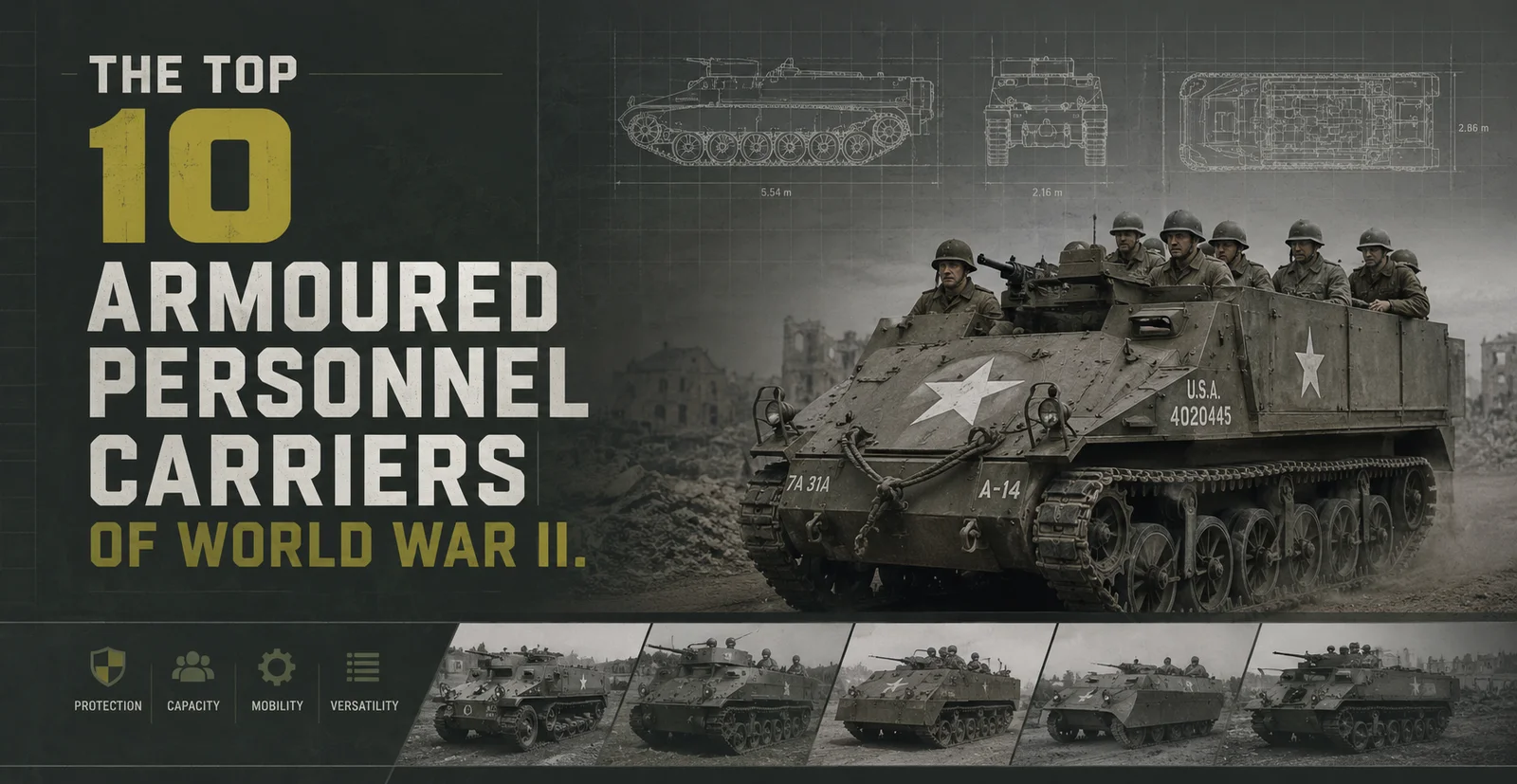
The Top 10 Armoured Personnel Carriers of World War II
World War II fundamentally changed the nature of land warfare. The rapid, highly mobile doctrines of Blitzkrieg and combined-arms manoeuvre revealed a critical vulnerability in traditional military structure: while tanks could punch through enemy lines at high speed, foot-marching infantry were quickly left behind, exposed to artillery and machine-gun fire.
To solve this, military engineers developed the Armoured Personnel Carrier (APC). By marrying tracked or half-tracked mobility with light armour protection, APCs bridged the gap between armour and infantry. They allowed soldiers to advance alongside tanks, disembark fresh at the objective, and provide essential protection to armoured units against close-quarters anti-tank infantry. Below is an overview of the ten most influential and widely deployed APCs that defined the battlefields of World War II.
📋 How We Evaluated This
Evaluating World War II armoured personnel carriers requires balancing raw technical specifications against real-world operational performance and industrial impact. The ten vehicles highlighted below have been assessed using four key criteria:
- Mobility & Protection Balance: How effectively the vehicle balanced cross-country mobility (navigating mud, snow, and rough terrain) with sufficient armour plate thickness to protect crews from small-arms fire and shell splinters.
- Operational Scale & Mass Production: The sheer numbers produced and the degree to which the vehicle was available to frontline units during critical campaigns.
- Tactical Versatility: The vehicle’s adaptability to serve beyond basic troop transport—such as acting as a weapon carrier, command post, ambulance, or prime mover.
- Doctrinal Impact: The extent to which the design shaped or enabled modern combined-arms tactics and influenced post-war APC design.
#10
Loyd Carrier (UK) 🇬🇧
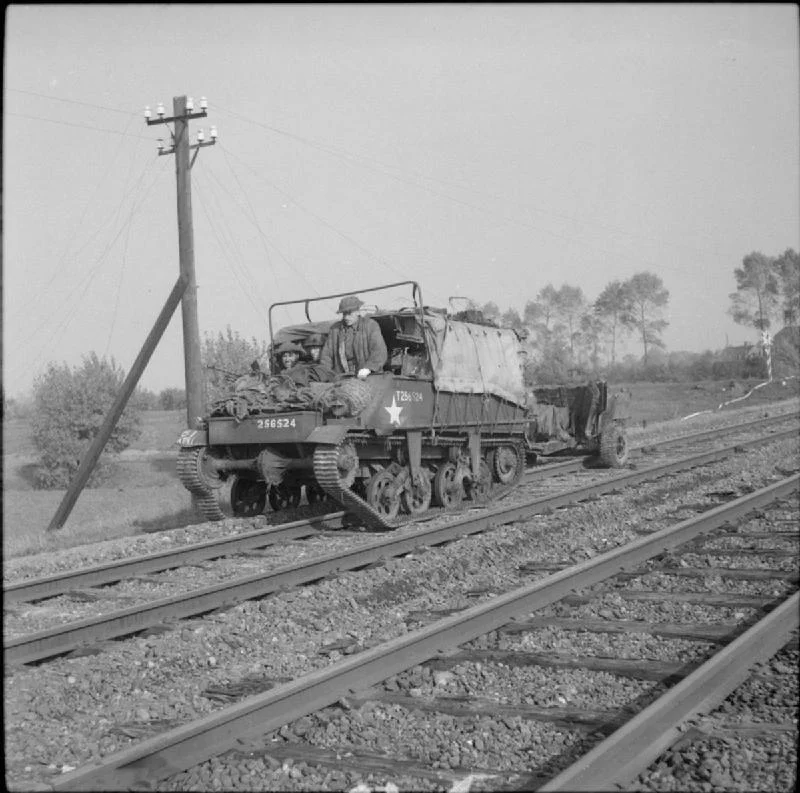
The British Army's versatile tracked utility vehicle, the Loyd Carrier, was introduced in 1939 to serve as a multi-role platform for motorized infantry and artillery support.
Design & Capabilities: Powered by an 85 hp Ford V8 side-valve petrol engine, the Loyd Carrier weighed approximately 4.5 tons and could transport 7-8 passengers or equivalent cargo. It featured light armor protection up to 7mm thickness, a top speed of 48-50 km/h, and an operational range of around 220 km. The vehicle had a simple, sloped armor design with corrugated manganese plating used where armor plate was unavailable, and could be fitted with machine gun mounts.
Operational Impact: The Loyd Carrier proved to be one of Britain's most produced tracked vehicles of the war, with approximately 26,000 units manufactured between 1939 and 1944 by Carden Loyd, Ford Motor Company, and Wolseley Motors. It served extensively in multiple roles including personnel carrier, artillery tractor, and general utility vehicle across British and Commonwealth forces, though it was often confused with the more famous Universal Carrier by both Allied and German forces. Production included three main variants distinguished by their engine sources: British-built, US-built, and Canadian-built Ford V8 engines.
#9
Type 1 Ho-Ha (Japan) 🇯🇵
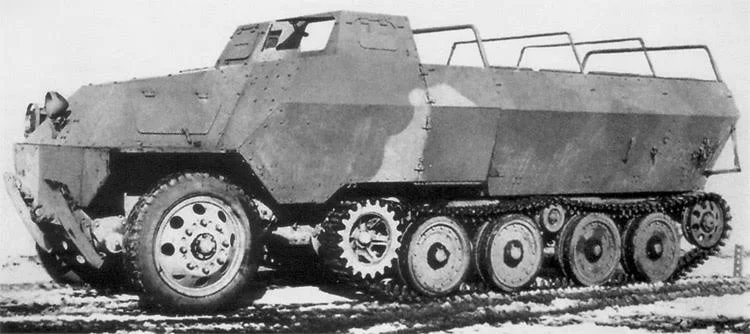
The Imperial Japanese Army’s purpose-built half-track, the Type 1 Ho-Ha, was introduced in 1941 to support Japanese motorized infantry doctrine.
Design & Capabilities: Powered by a 134 hp air-cooled diesel engine, the Ho-Ha carried up to 12 troops. It featured a pair of rear steering wheels, sloped side armour plating, rear double doors, and three light machine gun mounts (one forward, two firing sideways).
Operational Impact: On paper, the Ho-Ha was a modern and capable design. However, due to Japan's acute shortages of raw materials and heavy industrial prioritisation toward naval and aircraft production, fewer than 100 units were ever built, restricting its deployment mainly to late-war home defense reserves.
#8
M5 Half-track (USA/Lend-Lease) 🇺🇸
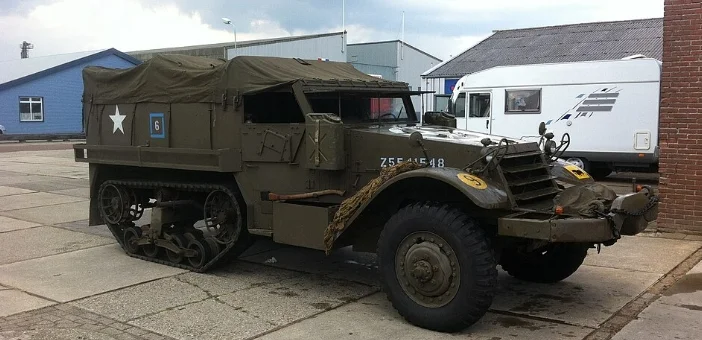
Produced by International Harvester, the M5 Half-track was a functional twin to the M3, built specifically to meet the high demand of Lend-Lease commitments to Allied nations.
Design & Capabilities: Because International Harvester used homogeneous steel armour (which was thicker but softer than the face-hardened armour on the M3), the M5 featured flat plating instead of sloped corners on the rear hull, making it visually distinct with rounded rear contours.
Operational Impact: The M5 was heavily supplied to the British Army, Free French Forces, Soviet Red Army, and Commonwealth allies. It ensured global Allied mechanisation remained unified without diverting M3 supplies from front-line American units.
#7
LVT / Landing Vehicle Tracked (USA) 🇺🇸
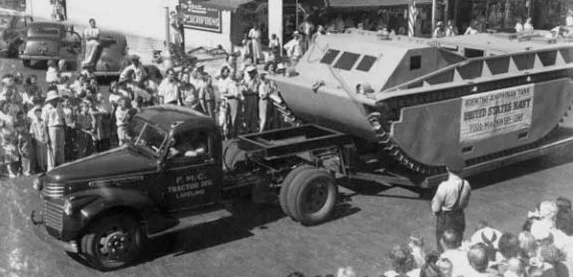
Nicknamed the "Amtrac" or "Water Buffalo", the LVT was an amphibious tracked vehicle originally designed for swamp rescue before being adopted by the US Marine Corps and US Army for beach landings.
Design & Capabilities: Driven in water and on land by unique paddle-tread tracks, the LVT could cross open sea, negotiate treacherous coral reefs, and crawl directly onto enemy beaches without stopping. Later models added sloped armour and rear ramps for rapid dismounting.
Operational Impact: The LVT was the crucial enabling technology for the Allied island-hopping campaign across the Pacific (Tarawa, Iwo Jima, Okinawa) and saw widespread service during European river crossings such as the Rhine.
#6
Kangaroo APC (Canada/UK) 🇬🇧 🇨🇦
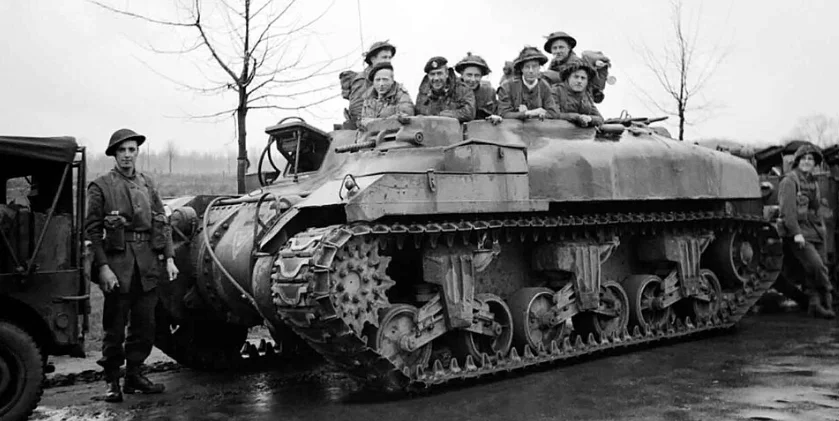
The Kangaroo was a brilliant field innovation born out of necessity during Operation Totalize in Normandy (August 1944). Conceived by Canadian Lieutenant-General Guy Simonds, obsolete or surplus armoured vehicles had their turrets or main guns removed to create improvised, heavily armoured troop carriers.
Design & Capabilities: Built from converted Ram, M7 Priest, Sherman, and Churchill chassis, Kangaroos offered full tank-grade protection (often 50–100 mm+ of steel) and fully tracked mobility capable of keeping pace with lead tanks.
Operational Impact: Unlike light half-tracks, Kangaroos could drive directly through heavy artillery barrages and dense defensive lines with minimal casualties. They set the design philosophy for modern "heavy APCs" used in high-intensity combat today.
#5
M2 Half-track (USA) 🇺🇸
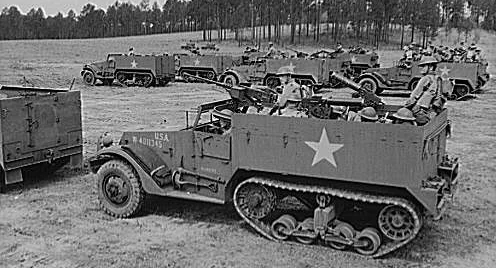
Designed primarily as an armoured prime mover to tow light artillery pieces (such as the 105 mm howitzer) and transport gun crews, the M2 Half-track was the immediate predecessor to the M3.
Design & Capabilities: The M2 featured a shorter body than the M3, seating ten men (driver, commander, and eight crew). Its distinguishing features included outer ammunition storage lockers and a full-perimeter skate rail inside the troop compartment for mounting machine guns.
Operational Impact: While superseded in squad-transport duties by the M3, the M2 saw extensive service throughout the war in reconnaissance units, artillery batteries, and as an armoured utility vehicle across the Pacific and European theatres.
#4
Sd.Kfz. 250 (Germany) 🇩🇪
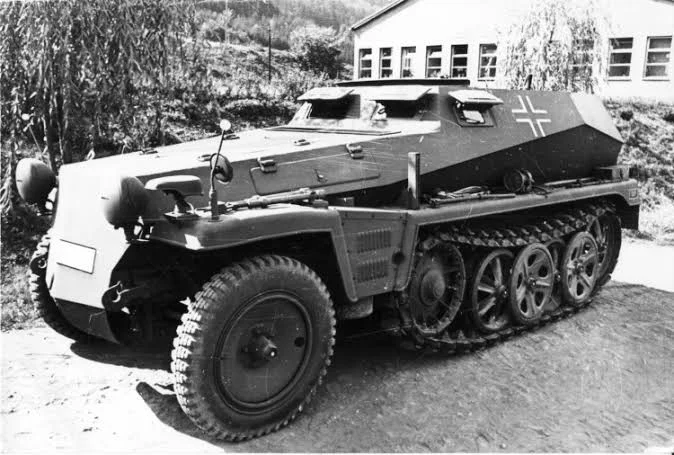
Developed alongside its larger sibling (the 251), the Sd.Kfz. 250 was a lighter, shorter half-track designed on a 1-ton chassis to transport smaller reconnaissance units and forward command teams.
Design & Capabilities: Carrying four to six personnel, the vehicle retained the angled armour profile of the 251 but featured a shorter wheelbase with four outer road wheels. It was fast, highly manoeuvrable, and fitted with short- or long-range radios.
Operational Impact: Essential for Aufklärungsabteilungen (reconnaissance battalions), it allowed scout units to push far ahead of main tank columns. Field Marshal Erwin Rommel famously used an Sd.Kfz. 250/3 command variant named 'Greif' (Griffin) during the North African campaign.
#3
Universal Carrier / Bren Gun Carrier (UK) 🇬🇧
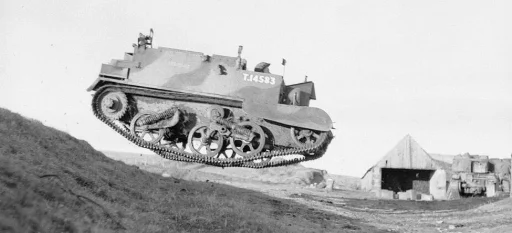
With over 113,000 units manufactured across the United Kingdom, Canada, Australia, and New Zealand, the Universal Carrier is the most produced armoured fighting vehicle in military history.
Design & Capabilities: Extremely compact, low-profile, and fully tracked, the Universal Carrier was powered by a standard flathead Ford V8 engine. It was lightly armoured (6–12 mm) and typically carried a crew of three or four, armed with a Bren light machine gun, Boys anti-tank rifle, or 2-inch mortar.
Operational Impact: Though smaller than traditional squad-sized APCs, its sheer ubiquity made it invaluable. It performed reconnaissance, casualty evacuation, ammunition supply, and troop transport across every theatre of war involving Commonwealth forces.
#2
Sd.Kfz. 251 (Germany) 🇩🇪
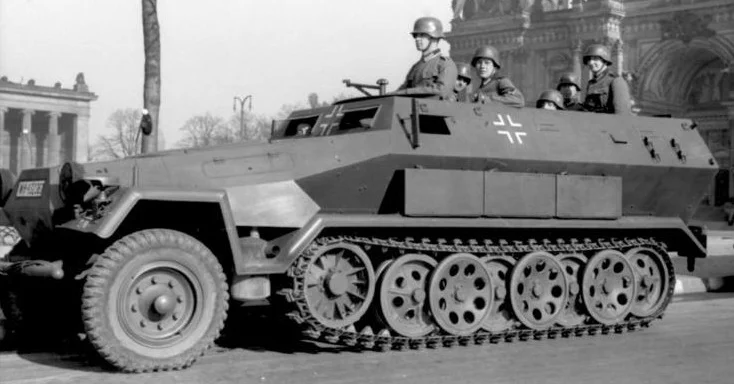
Widely known as the "Hanomag" (after one of its primary manufacturers), the Sonderkraftfahrzeug 251 was the iconic medium half-track of the German Wehrmacht, built explicitly to transport Panzergrenadiers into battle.
Design & Capabilities: Featuring distinctive sloped side armour designed to deflect small-arms fire, the Sd.Kfz. 251 carried 10 infantrymen. Its complex interleaved road-wheel suspension provided superb off-road mobility, while twin rear doors allowed soldiers to dismount under cover.
Operational Impact: Highly regarded by its crews, the 251 served on every European front. It was modified into over 20 specialised variants—ranging from flame-thrower vehicles to night-fighting radar carriers—though German industry struggled to produce enough to fully equip every infantry unit.
#1
M3 Half-track (USA) 🇺🇸
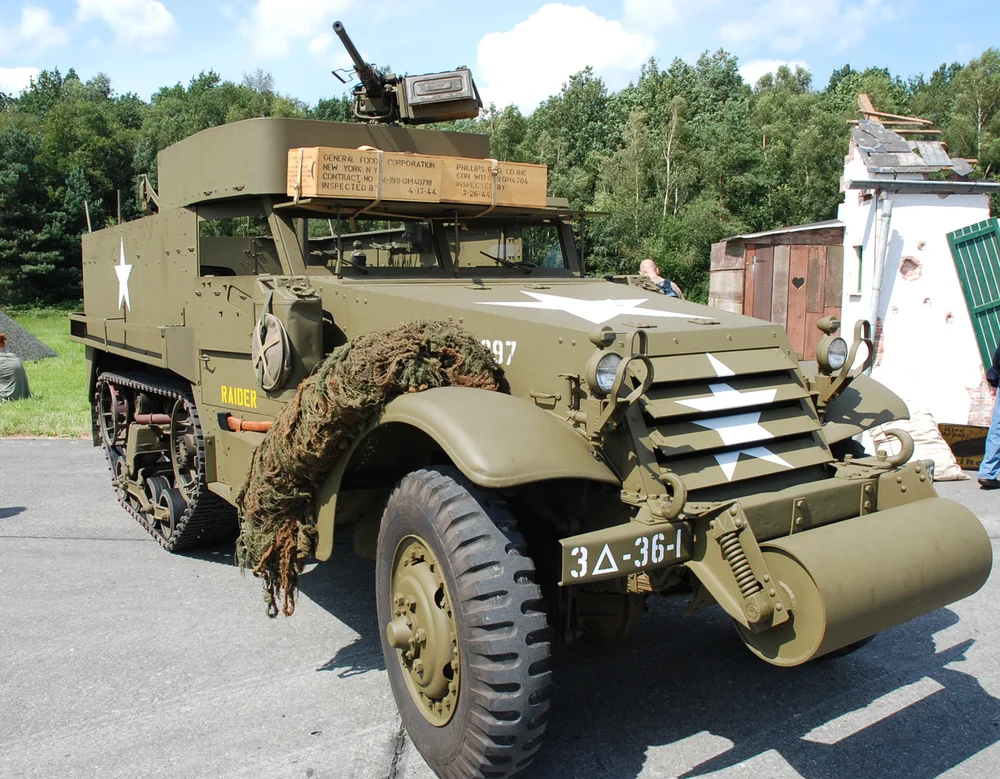
The M3 Half-track was the undisputed workhorse of Western Allied mechanised infantry. Produced by the White Motor Company, Autocar, and Diamond T, over 15,000 standard M3s (and over 30,000 total variants) rolled off American assembly lines.
Design & Capabilities: Powered by a reliable White 160AX six-cylinder petrol engine, the M3 could carry an entire 13-man rifle squad. It featured a front-mounted roller (or winch) to assist in crossing ditches, and a skate mount carrying a .50 calibre Browning M2 heavy machine gun alongside .30 calibre weapons.
Operational Impact: Simple to drive and mechanically forgiving, the M3 gave US armoured divisions unprecedented strategic mobility across Western Europe and North Africa, setting the benchmark for mass-produced troop transports.
Conclusion
- M3 Half-track (USA)
- Sd.Kfz. 251 (Germany)
- Universal Carrier / Bren Gun Carrier (UK)
- Sd.Kfz. 250 (Germany)
- M2 Half-track (USA)
- Kangaroo APC (Canada/UK)
- LVT / Landing Vehicle Tracked (USA)
- M5 Half-track (USA)
- Type 1 Ho-Ha (Japan)
- Loyd Carrier (UK)
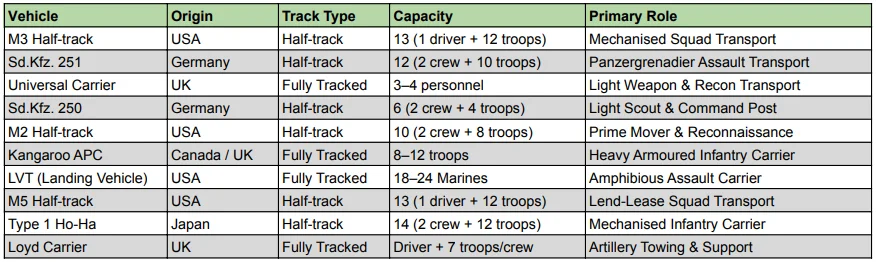
The development of the Armoured Personnel Carrier during World War II reshaped land warfare permanently. Vehicles like the American M3 and German Sd.Kfz. 251 proved that tanks could not operate effectively in isolation; they required close, mobile infantry support to screen against ambushes and secure ground. Meanwhile, specialized designs like the field-expedient Kangaroo and amphibious LVT demonstrated that speed and heavy protection were essential to surviving modern artillery and entrenched defences.
By the end of the conflict in 1945, the traditional concept of foot-marching infantry on the high-intensity battlefield was largely obsolete. The designs tested in Normandy, North Africa, and the Pacific laid the direct technological blueprint for cold-war platforms like the M113 and the modern Infantry Fighting Vehicles (IFVs) operating today.
💬 Comments (0)
No comments yet. Be the first to share your thoughts.