Top 10 Most Successful Hostage Rescue Operations in History
When diplomatic channels collapse and human lives hang in the balance, nation states call upon their most capable asset: elite special operations forces. Hostage rescue is universally regarded as the most complex and high-risk operational domain in warfare. Success requires flawless intelligence, absolute speed, surgical precision, and the willingness to enter confined, heavily defended spaces under intense fire.
Throughout modern military history, a handful of missions stand out as masterpieces of tactical execution. From airborne raids thousands of miles from home to psychological deception and sniper marksman operations at sea, these ten hostage rescue operations defined the doctrines of counter-terrorism and elite warfare.
📋 How We Evaluated This
Operational Evaluation Criteria
Determining the "most successful" rescue operations requires an objective evaluation beyond tactical drama. The operations included in this analysis were evaluated against five specific criteria:
- Hostage Survival Rate: The proportion of captives brought home alive relative to the threat environment.
- Tactical Complexity & Innovation: The technical difficulty of the breach, environmental constraints (e.g. hijacked aircraft, fortified compounds, maritime targets), and novel tactics introduced.
- Intelligence & Deception: The quality of actionable intelligence and strategic surprise leveraged to neutralise hostage-takers before they could execute captives.
- Force Preservation: The operational efficiency of the assault force in maintaining minimal casualties among rescue operators.
- Geopolitical Impact: The legacy of the operation in setting doctrine for international counter-terrorist units.
#10
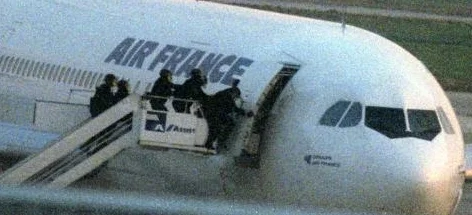
GIGN Rescue of Air France Flight 8969 (France, 1994)
- Location: Marseille Provence Airport, France
- Unit Involved: GIGN (Groupe d'Intervention de la Gendarmerie Nationale)
On 24 December 1994, four members of the Armed Islamic Group (GIA) hijacked Air France Flight 8969 in Algiers. Armed with automatic weapons, dynamite, and grenades, the hijackers executed three passengers and intended to fly the Airbus A300 to Paris to crash it into the Eiffel Tower.
After the plane landed in Marseille to refuel, GIGN operators launched a direct tactical assault. Using motorized mobile boarding ramps (passerelles), three assault groups approached the aircraft. Operators mounted the ramps under heavy automatic rifle and grenade fire, forcing entry through the front and rear doors. A furious firefight erupted in the cockpit and forward cabin area, with over 1,000 rounds fired.
- Outcome: All 171 remaining passengers and crew were saved. All four hijackers were killed. Although nine GIGN operators were wounded during the heavy close-quarters firefight, zero civilian fatalities occurred during the assault.
#9
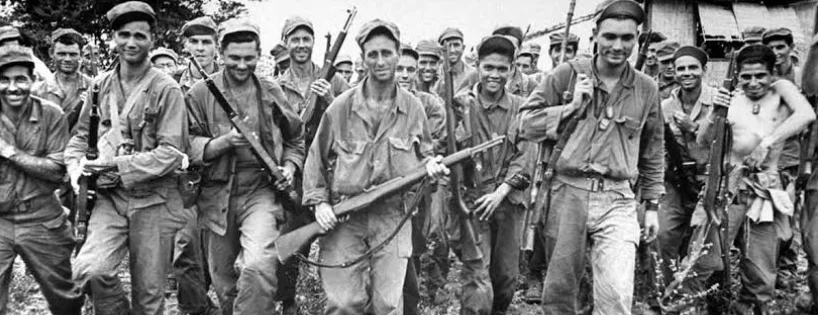
The Great Raid on Cabanatuan (Philippines, 1945)
- Location: Nueva Ecija, Philippines
- Unit Involved: U.S. Army 6th Ranger Battalion, Alamo Scouts & Filipino Guerrillas
In January 1945, as Allied forces advanced across the Philippines, military commanders feared that Japanese forces would execute remaining POWs at the Cabanatuan prisoner-of-war camp. The camp held over 500 Allied soldiers, many of whom were survivors of the Bataan Death March.
In a classic tactical operation 30 miles behind enemy lines, 121 U.S. Rangers and 200 Filipino guerrillas crawled over a mile of open field undetected under the cover of night. To mask the noise of their crawl, a P-61 Black Widow night fighter buzzed low over the camp to distract the guards. Upon opening fire, the Rangers destroyed the guard towers, neutralised the garrison force within minutes, and evacuated hundreds of emaciated prisoners using local wooden carts.
- Outcome: 522 POWs were liberated. The raiding party suffered two Ranger casualties, making it the most successful tactical POW rescue in American military history.
#8
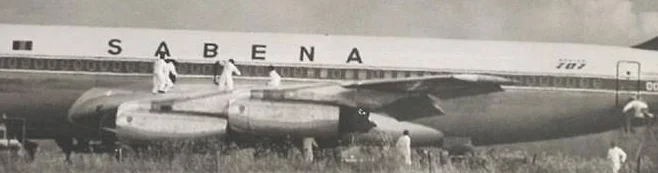
Operation Isotope – Sabena Flight 571 (Israel, 1972)
- Location: Lod Airport (Ben Gurion), Tel Aviv, Israel
- Unit Involved: Sayeret Matkal
On 8 May 1972, four terrorists from the Black September organization hijacked Sabena Flight 571 en route from Vienna to Tel Aviv, demanding the release of 317 Palestinian prisoners. They landed the aircraft at Lod Airport and threatened to blow up the plane with all 90 passengers and crew aboard.
Defense Minister Moshe Dayan authorized Operation Isotope. Israeli technicians secretly disabled the aircraft's hydraulics and deflated its tires under cover of night. The following morning, 16 Sayeret Matkal commandos—including future Prime Ministers Ehud Barak (who led the assault) and Benjamin Netanyahu—approached the plane disguised in white overalls as airfield mechanics sent to service the aircraft. Commencing the breach, they stormed the six emergency doors within ten seconds.
- Outcome: All surviving passengers were rescued (one passenger subsequently died of wounds). Two terrorists were killed and two were captured.
#7
Maersk Alabama Lifeboat Rescue (USA, 2009)
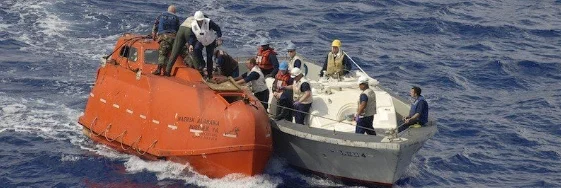
- Location: Indian Ocean, off the coast of Somalia
- Unit Involved: United States Naval Special Warfare Development Group (DEVGRU / SEAL Team 6)
In April 2009, four Somali pirates hijacked the U.S.-flagged cargo ship Maersk Alabama. The ship's master, Captain Richard Phillips, surrendered himself as a hostage to secure the safety of his crew and was moved onto an enclosed 28-foot lifeboat, which was subsequently towed by the destroyer USS Bainbridge.
As negotiations broke down and the pirates showed increasing volatility, Navy SEAL Team 6 snipers positioned on the fantail of the USS Bainbridge waited for a clear window. Despite both vessels rolling heavily on ocean swells in low light, three snipers synchronized their shots simultaneously, killing the three pirates visible inside the lifeboat with high-calibre rifle fire.
- Outcome: Captain Phillips was rescued completely uninjured. The three hostage-takers on board were killed instantly, and a fourth was taken into custody.
#6
Operation Barras (Sierra Leone / UK, 2000)
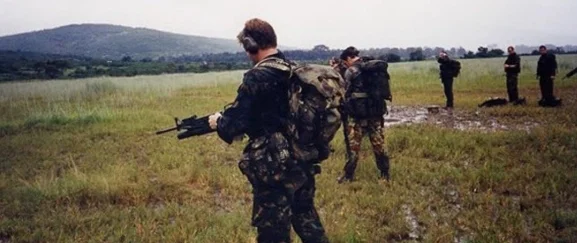
- Location: Rokel Creek, Sierra Leone
- Unit Involved: 22 SAS and 1st Battalion, Parachute Regiment (1 PARA)
On 25 August 2000, a patrol of eleven British soldiers from the Royal Irish Regiment and a Sierra Leonean liaison officer were captured by the "West Side Boys"—a rogue, heavily armed militia known for extreme violence and drug abuse—operating out of a fortified jungle base at Gberi Bana.
When negotiations stalled, British forces launched a simultaneous assault across both sides of Rokel Creek. 1 PARA assaulted the opposing camp at Magbeni to suppress heavy weapons, while SAS operators inserted directly via Chinook helicopters onto the Gberi Bana camp. The assault force encountered fierce resistance in swampy terrain but rapidly overwhelmed the militia's defenses.
- Outcome: All six remaining British soldiers and 22 Sierra Leonean civilians were rescued. One SAS soldier was killed in action, and 25 militia members were neutralised.
#5
Operation Jaque (Colombia, 2008)
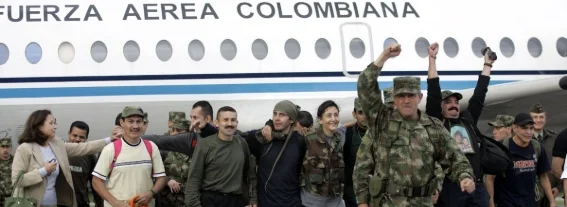
- Location: Guaviare Department, Colombian Jungle
- Unit Involved: Colombian Military Intelligence
Operation Jaque (Checkmate) is widely considered one of the most brilliant bloodless intelligence operations in modern warfare. The Revolutionary Armed Forces of Colombia (FARC) were holding 15 high-value hostages, including former Colombian presidential candidate Íngrid Betancourt and three American defense contractors, deep within the Amazonian jungle.
Instead of a violent assault, Colombian military intelligence infiltrated FARC's communications network, persuading the local commander to transfer the hostages to another camp. The military deployed a painted civilian helicopter crewed by commandos disguised as international humanitarian aid workers and camera operators. The hostages were loaded onto the aircraft alongside two local FARC leaders. Once airborne, the commandos restrained the guards without firing a single shot.
- Outcome: All 15 hostages were rescued safely without a single shot fired or casualty on either side.
#4
Operation Chavín de Huántar (Peru, 1997)
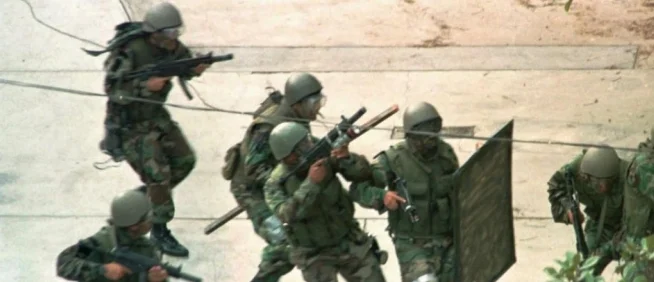
- Location: Lima, Peru
- Unit Involved: Peruvian Armed Forces Commandos
In December 1996, 14 members of the Túpac Amaru Revolutionary Movement (MRTA) took 72 high-profile diplomats, government officials, and military officers hostage at the Japanese Ambassador's residence in Lima. The siege dragged on for 126 days while Peruvian authorities engaged in negotiations.
Behind the scenes, Peruvian military engineers executed a massive engineering feat, constructing an elaborate network of subterranean tunnels beneath the compound fitted with lights, ventilation, and listening devices. On 22 April 1997, commandos detonated explosive charges under the floorboards of the main hall where several terrorists were playing indoor football. Commandos simultaneously breached from the roof and tunnels.
- Outcome: 71 of the 72 hostages were saved (one hostage died of injuries). Two commandos and all 14 MRTA guerillas were killed. It remains one of the most structurally complex breaching operations ever conducted.
#3
Operation Feuerzauber – Mogadishu Raid (West Germany, 1977)
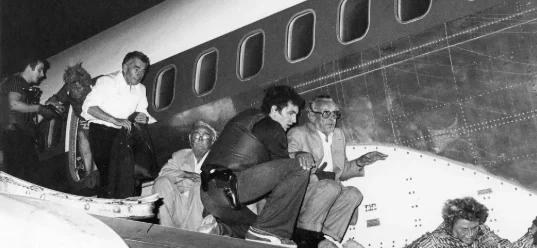
- Location: Mogadishu Airport, Somalia
- Unit Involved: GSG 9 (Grenzschutzgruppe 9)
Lufthansa Flight 181 was hijacked on 13 October 1977 by four PFLP terrorists who forced the Boeing 737 through a grueling multi-stop route across the Middle East and East Africa, eventually executing the plane’s captain, Jürgen Schumann. The aircraft landed at Mogadishu, Somalia, where the hijackers threatened to detonate explosives aboard.
West Germany’s elite counter-terrorism unit, GSG 9—assisted by two British SAS advisors who provided newly developed flashbang grenades—executed Operation Feuerzauber (Fire Magic). Somali forces created a diversionary fire on the airfield to draw the terrorists to the cockpit. GSG 9 operators placed specialized aluminum ladders against the fuselage, forced open the emergency doors, and flooded the cabin with flashbangs.
- Outcome: All 86 remaining passengers and four crew members were rescued unharmed. Three hijackers were killed and one was captured, with zero casualties among the rescue team.
#2
Operation Nimrod – Iranian Embassy Siege (UK, 1980)
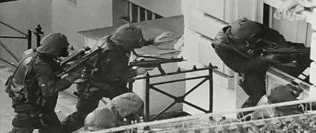
- Location: London, United Kingdom
- Unit Involved: 22 Special Air Service (SAS)
On 30 April 1980, six armed gunmen representing an Iranian-Arab separatist group stormed the Iranian Embassy at Prince's Gate, London, taking 26 people hostage. After a six-day standoff, the hostage-takers executed Iranian diplomat Abbas Lavasani and threw his body onto the street. Prime Minister Margaret Thatcher immediately transferred operational control to the British military.
Broadcast live on international television, SAS Red and Blue teams abseiled from the roof, breaching the building's windows using frame charges and stun grenades (flashbangs). In a seventeen-minute indoor battle characterized by relentless aggression and rapid room clearance, the operators systematically eliminated five of the six terrorists.
- Outcome: 19 of the remaining 20 hostages were rescued alive during the assault. Operation Nimrod catapulted the SAS into the international spotlight and established modern close-quarters battle (CQB) protocols.
#1
Operation Entebbe / Thunderbolt (Israel, 1976)
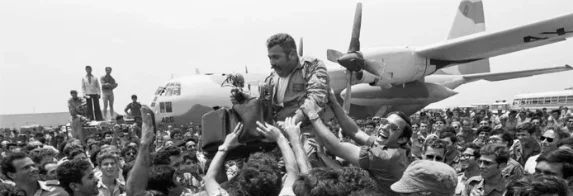
- Location: Entebbe International Airport, Uganda
- Unit Involved: Sayeret Matkal (Israeli Special Forces)
On 27 June 1976, Air France Flight 139 was hijacked by Palestinian (PFLP-EO) and German Revolutionary Cells terrorists, eventually landing at Entebbe Airport under the protection of Ugandan dictator Idi Amin. The hijackers separated Jewish and Israeli passengers from non-Israeli captives, holding 106 people hostage and demanding the release of 53 imprisoned militants.
In response, Israel mounted an extraordinary long-range raid. Four C-130 Hercules transport aircraft flew over 2,500 miles (4,000 km) at low altitude to avoid radar. Upon landing, Israeli commandos deployed a black Mercedes-Benz crafted to mimic Idi Amin’s personal ceremonial vehicle, allowing them to approach the terminal undetected. Within 99 minutes, the assault team cleared the terminal, killed all hijackers, and neutralised supporting Ugandan forces.
- Outcome: 102 out of 106 hostages were successfully rescued. The mission leader, Lieutenant Colonel Yonatan Netanyahu, was the sole military fatality. Operation Entebbe remains the global gold standard for long-range hostage rescue operations.
Conclusion
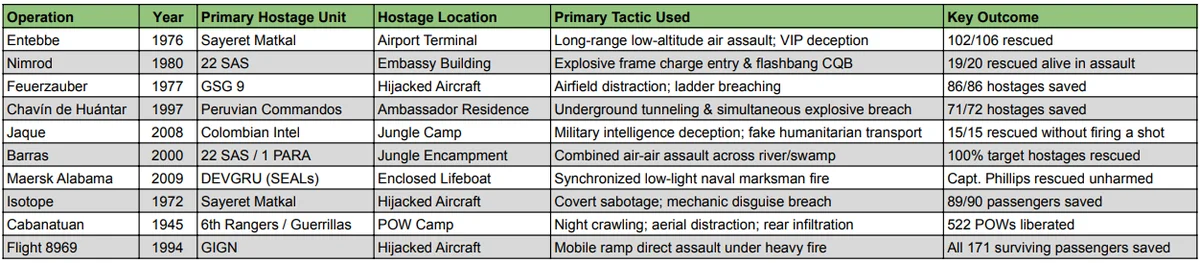
The 10 Greatest Hostage Rescue Operations
- Operation Entebbe / Thunderbolt (Israel, 1976)
- Operation Nimrod – Iranian Embassy Siege (UK, 1980)
- Operation Feuerzauber – GSG 9 Mogadishu Raid (West Germany, 1977)
- Operation Chavín de Huántar (Peru, 1997)
- Operation Jaque (Colombia, 2008)
- Operation Barras (Sierra Leone/UK, 2000)
- Maersk Alabama Lifeboat Rescue (USA, 2009)
- Operation Isotope – Sabena Flight 571 Rescue (Israel, 1972)
- The Great Raid on Cabanatuan (Philippines, 1945)
- GIGN Rescue of Air France Flight 8969 (France, 1994)
The history of counter-terrorist and hostage rescue operations demonstrates that tactical superiority is rarely about brute force. Instead, successful rescues rely on meticulous planning, actionable intelligence, strict operational security, and the psychological impact of surprise.
Whether through subterranean engineering in Peru, synchronized naval marksmanship off Somalia, or bloodless deception in Colombia, these ten operations highlight how elite units adapt to hostile environments under maximum pressure. As counter-terrorism doctrines evolve against modern asymmetrical threats, the core principles established by these landmark rescues remain the blueprint for special forces worldwide.
💬 Comments (0)
No comments yet. Be the first to share your thoughts.