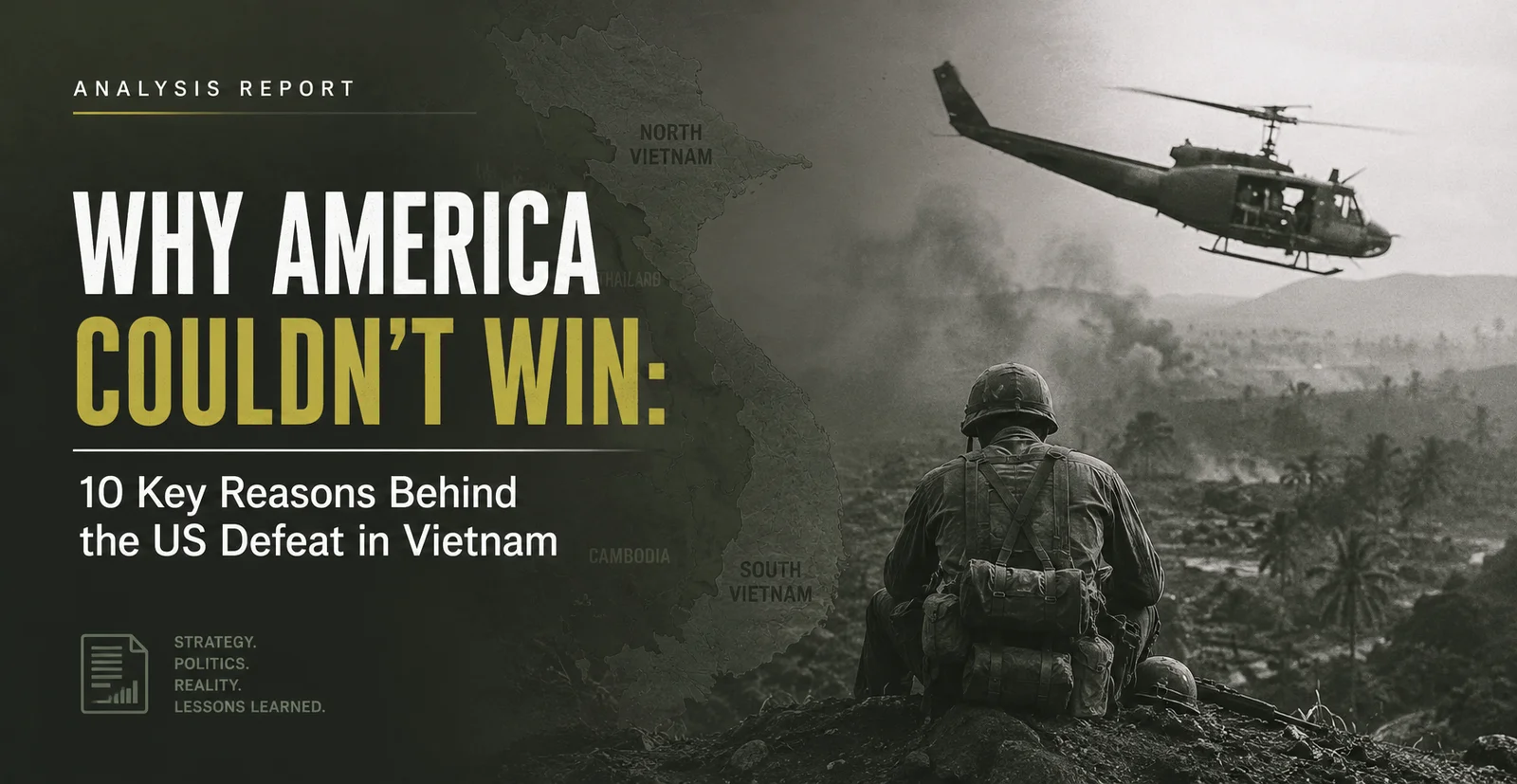
Why America Couldn't Win: 10 Key Reasons Behind the US Defeat in Vietnam
The Vietnam War remains one of the most significant military and political turning points of the 20th century. Despite possessing overwhelming technological superiority, immense financial resources, and the world's most powerful conventional military, the United States was unable to achieve its strategic objectives in Southeast Asia.
The American failure in Vietnam was not the result of a single tactical error or catastrophic military defeat on the battlefield. Instead, it was an accumulation of strategic miscalculations, an underestimation of an asymmetric adversary, deep-seated political instability within South Vietnam, and a breakdown of consensus on the domestic front. This article explores the ten primary factors that ultimately rendered an American victory impossible.
📋 How We Evaluated This
To evaluate and rank the factors that led to the US outcome in Vietnam, this analysis uses a multi-dimensional historical evaluation framework. Each factor was assessed against four core criteria:
- Strategic & Operational Impact: The degree to which the factor limited US military effectiveness or neutralised its technological advantages on the ground.
- Geopolitical & Logistical Viability: The extent to which external political boundaries and superpower diplomacy restricted strategic freedom of movement.
- Sociopolitical Legitimacy: The stability, governance capability, and popular support of the local allied government compared to its opponent.
- Sustained Willpower: The long-term psychological and domestic political endurance required to maintain war efforts over time.
#10
Lack of Clear Objectives and an Exit Strategy
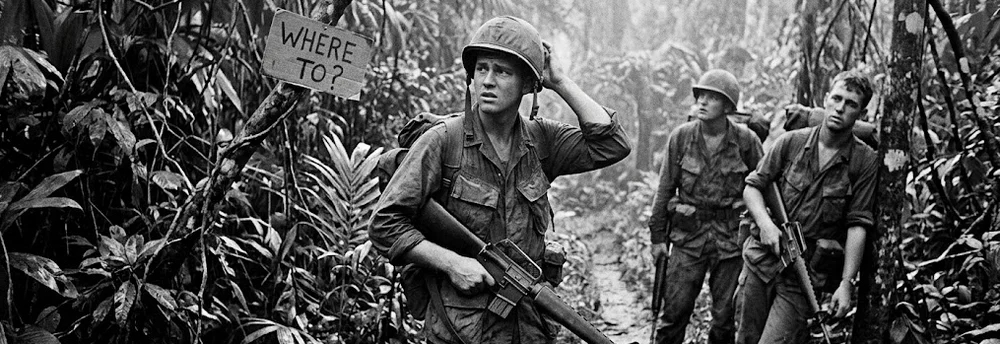
The United States entered Vietnam under the banner of the "Domino Theory"—the belief that if South Vietnam fell to communism, the rest of Southeast Asia would follow. However, Washington never established a clear, achievable definition of victory. Because the policy was rooted in containment rather than destruction of the North Vietnamese state, US strategy was inherently defensive and reactionary. Without a defined political end-state or realistic exit strategy, the intervention devolved into a stalemate with no viable path to victory.
#9
Domestic Anti-War Movement and Declining Public Support
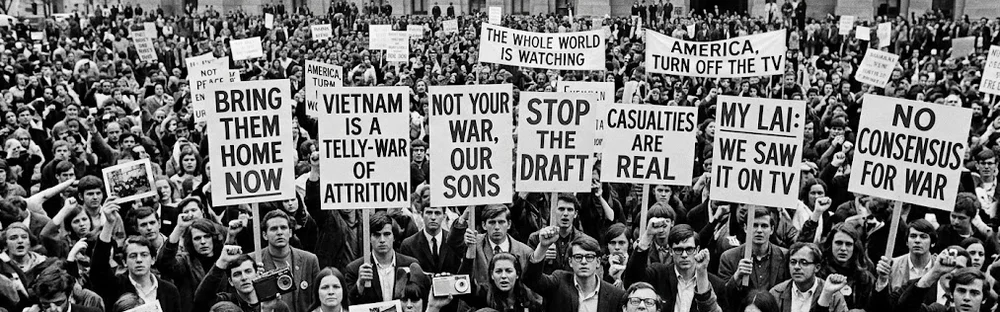
Vietnam was America’s first televised war. Uncensored evening news broadcasts brought graphic images of combat, civilian suffering, and casualties directly into living rooms across the nation. As high profile incidents like the My Lai Massacre came to light and the draft pulled hundreds of thousands of young men into service, massive anti-war protests erupted across American universities and cities. The loss of political consensus at home made sustaining a long-term military commitment politically untenable.
#8
The Tet Offensive and the "Credibility Gap"
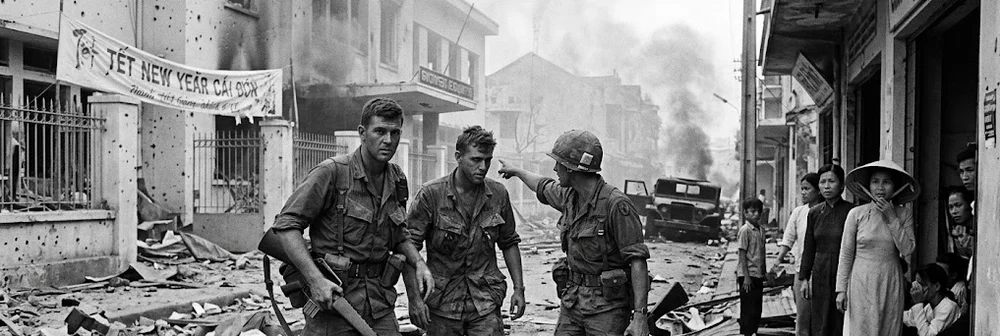
Launched during the Vietnamese New Year in January 1968, the Tet Offensive saw communist forces execute coordinated surprise attacks on over 100 cities and towns across South Vietnam, including the US Embassy in Saigon. Although American and ARVN troops defeated the offensive tactically and inflicted devastating losses on the Viet Cong, the sheer scale of the assault shocked the American public. It shattered official government claims that the enemy was being worn down, creating a permanent "credibility gap" between official optimism and battlefield reality.
#7
Flawed Strategy: Reliance on Attrition ("Body Counts")
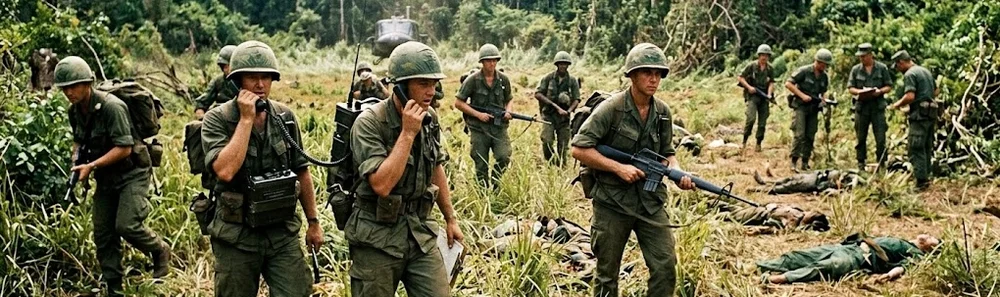
American military strategy, championed by General William Westmoreland, relied on a doctrine of attrition carried out via "search-and-destroy" missions. Success was measured not by territorial control, but by enemy casualties ("body counts"). This strategy proved fundamentally flawed against a opponent with a vast pool of manpower willing to accept heavy losses. US troops frequently cleared areas at great cost, only to abandon them immediately, allowing communist forces to return as soon as American units departed.
#6
Soviet and Chinese Aid Combined with US Fear of Escalation
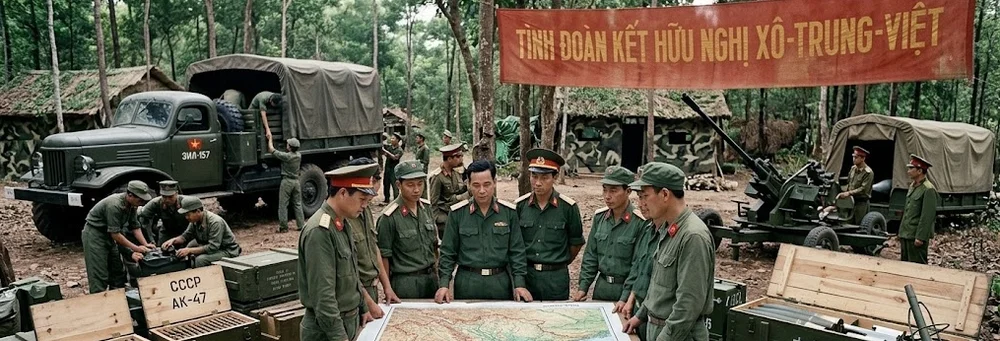
North Vietnam was far from isolated. It received vast quantities of modern weaponry, heavy artillery, anti-aircraft missiles, radar equipment, and financial aid from both the Soviet Union and the People's Republic of China. At the same time, memory of China's intervention in the Korean War left Washington terrified that aggressive action—such as invading North Vietnam or carpet-bombing border regions—would trigger World War III with Moscow or Beijing, forcing US military commanders to operate with one hand tied behind their backs.
#5
Difficult Jungle Terrain and Climate
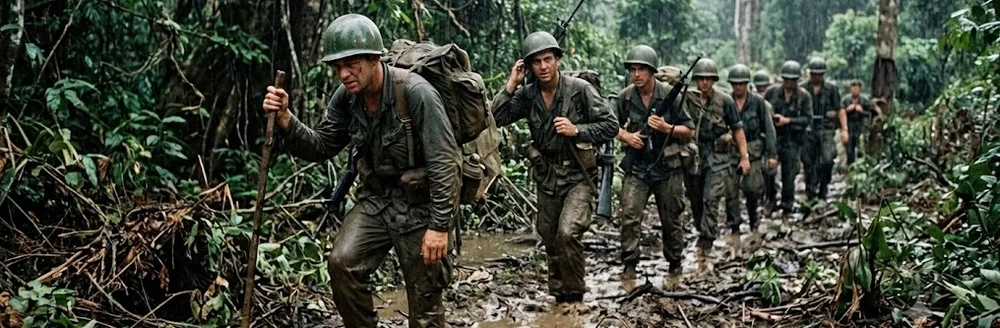
The physical environment of Vietnam presented a continuous logistical nightmare for US forces. Dense triple-canopy jungles, rugged mountain ranges, impassable swamps, and monsoon seasons restricted armoured vehicle movement and obscured line-of-sight visibility. Tropical heat and humidity degraded equipment, while diseases like malaria and trench foot severely sapped troop strength, neutralizing conventional military doctrine designed for European or Korean topographies.
#4
North Vietnamese Nationalism, Resilience, and Determination
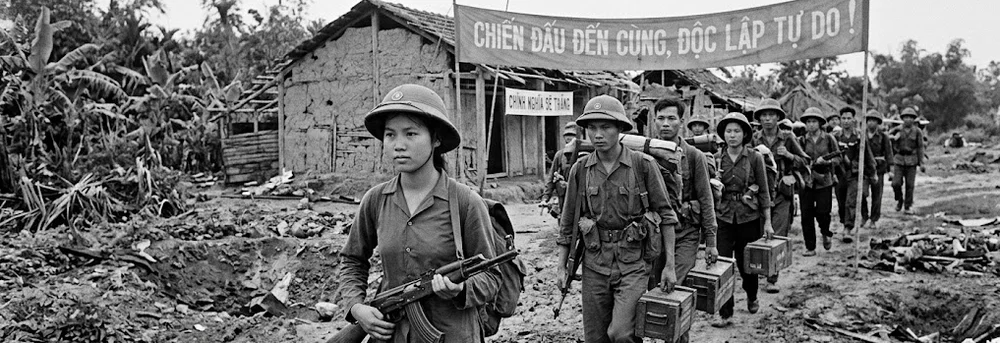
For Hanoi and the Viet Cong, the conflict was not an abstract geopolitical exercise; it was an existential struggle for national liberation and reunification following decades of French colonial rule. This intense nationalist resolve fostered exceptional morale and an willingness to absorb staggering human losses. While American endurance was constrained by political electoral cycles and public tolerance, North Vietnam was prepared to fight an open-ended war of endurance regardless of time or cost.
#3
Political Instability and Weakness of South Vietnam
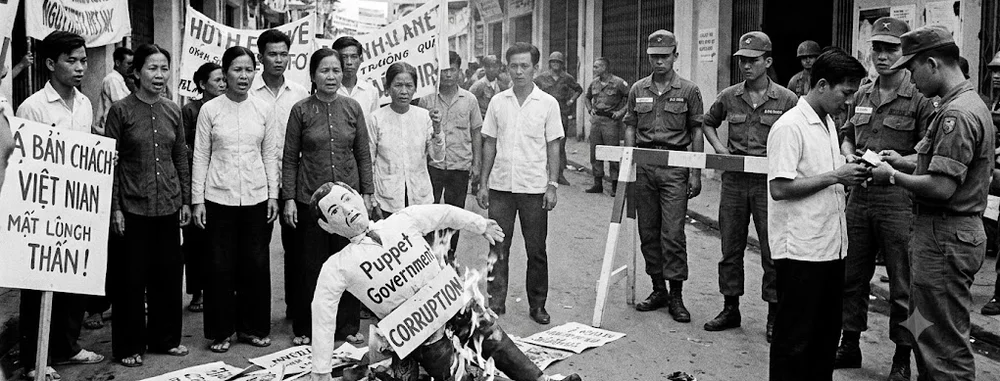
A military alliance is only as strong as the political foundation supporting it. The Republic of Vietnam (South Vietnam) was plagued by systemic corruption, religious friction, and chronic political instability, particularly after the US-backed coup that removed President Ngo Dinh Diem in 1963. The South Vietnamese government in Saigon failed to win the "hearts and minds" of its rural peasantry, leading many citizens to view the regime as an illegitimate puppet of Western powers.
#2
The Ho Chi Minh Trail and Cross-Border Sanctuaries
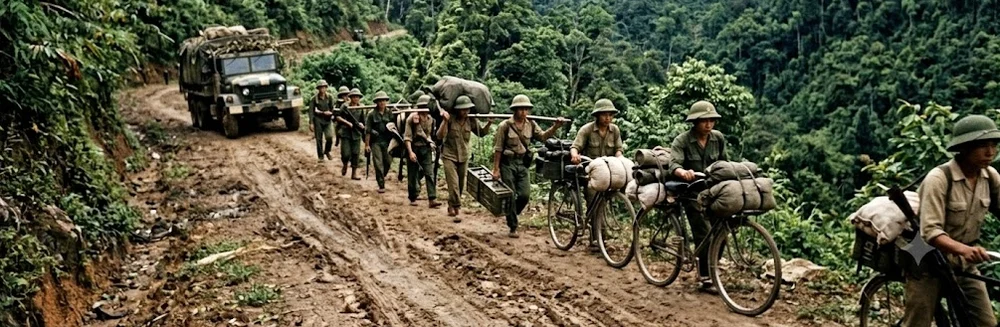
Running through the rugged mountains and dense jungles of technically neutral Laos and Cambodia, the Ho Chi Minh Trail served as an unshakeable supply line for communist forces. It allowed Hanoi to continuously transport personnel, weapons, and munitions into South Vietnam.
Because Washington feared that a full-scale ground invasion of Laos or Cambodia would trigger a wider global conflict, North Vietnamese troops enjoyed vital safe havens where they could retreat, regroup, and rearm without fear of permanent US ground occupation.
#1
Guerrilla Warfare and Asymmetric Tactics
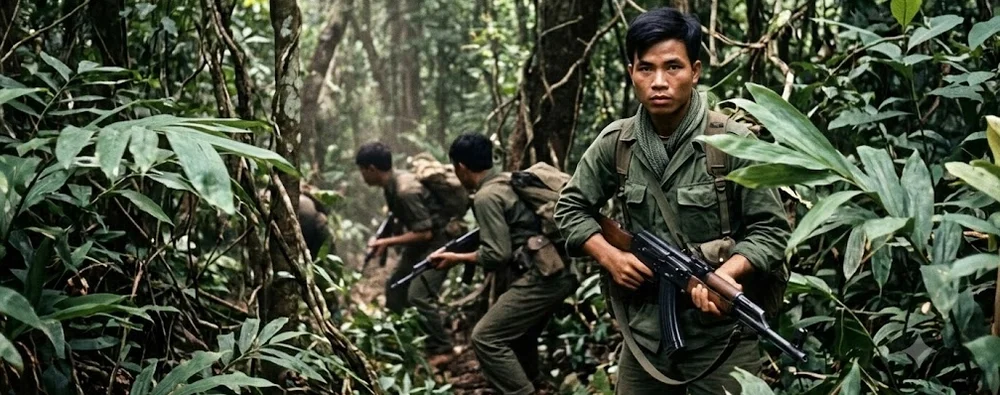
The National Liberation Front (Viet Cong) and the North Vietnamese Army (NVA) neutralised American technological dominance by refusing to fight a conventional war. Instead, they employed hit-and-run tactics, ambushes, booby traps, and extensive underground systems such as the Củ Chi tunnels. By engaging American troops at close quarters—a strategy described as "clinging to the belt"—they minimized the effectiveness of US artillery and air strikes, turning the conflict into a costly, demoralising war of attrition.
Conclusion
10 Reasons Why the US Failed in Vietnam
- Guerrilla warfare and asymmetric tactics
- The Ho Chi Minh Trail and cross-border sanctuaries (Laos/Cambodia)
- Political instability and weakness of South Vietnam
- North Vietnamese nationalism, resilience, and determination
- Difficult jungle terrain and climate
- Soviet/Chinese aid combined with U.S. fear of escalation
- Flawed strategy — reliance on attrition ("body counts") over territorial control
- The Tet Offensive and the "credibility gap"
- Domestic anti-war movement and declining public support
- Lack of clear objectives and exit strategy
The outcome of the Vietnam War demonstrated that sheer military force and technological superiority cannot compensate for a flawed political strategy and a fundamental misunderstanding of local realities.
Ultimately, the United States was fighting a limited war for abstract geopolitical containment, whereas its enemy was fighting an all-out war for national survival and independence. When combined with the inability to secure the cross-border supply lines, the instability of the Saigon government, and the collapse of domestic support in the US, an American victory became an impossibility.
💬 Comments (0)
No comments yet. Be the first to share your thoughts.